OrgDrafter vs. Orgvue
Enterprise org design power. Day-one deployment.
Teams choose OrgDrafter over Orgvue when they need real financial modeling and structural analytics now — not after a lengthy configuration project and a dedicated admin to run it. Upload your data and start modeling the same afternoon.
OrgDrafter vs. Orgvue, at a glance
| Capability | Orgvue | OrgDrafter |
|---|---|---|
| Time to first model | Often involves implementation projects and configuration | Upload and model the same day |
| Who can run a scenario | Frequently managed by trained administrators in larger deployments | Any operator or HR leader, no training project |
| Financial analytics | Powerful, but locked behind setup and modeling expertise | Fully-loaded cost and run-rate live on the canvas |
| Automated structure auditing | Available with configuration | Span, layer, and support-ratio flags out of the box |
| Conversational AI | Limited native support | Ask AI to draft and explain org changes in plain English |
| Deal & data isolation | Enterprise-grade | Tenant-isolated workspaces per deal or scenario |
Model on day one, not after the rollout.
Standing up Orgvue often involves a configuration project, data onboarding, and setup time before anyone runs a single scenario — time deal and transformation teams rarely have.
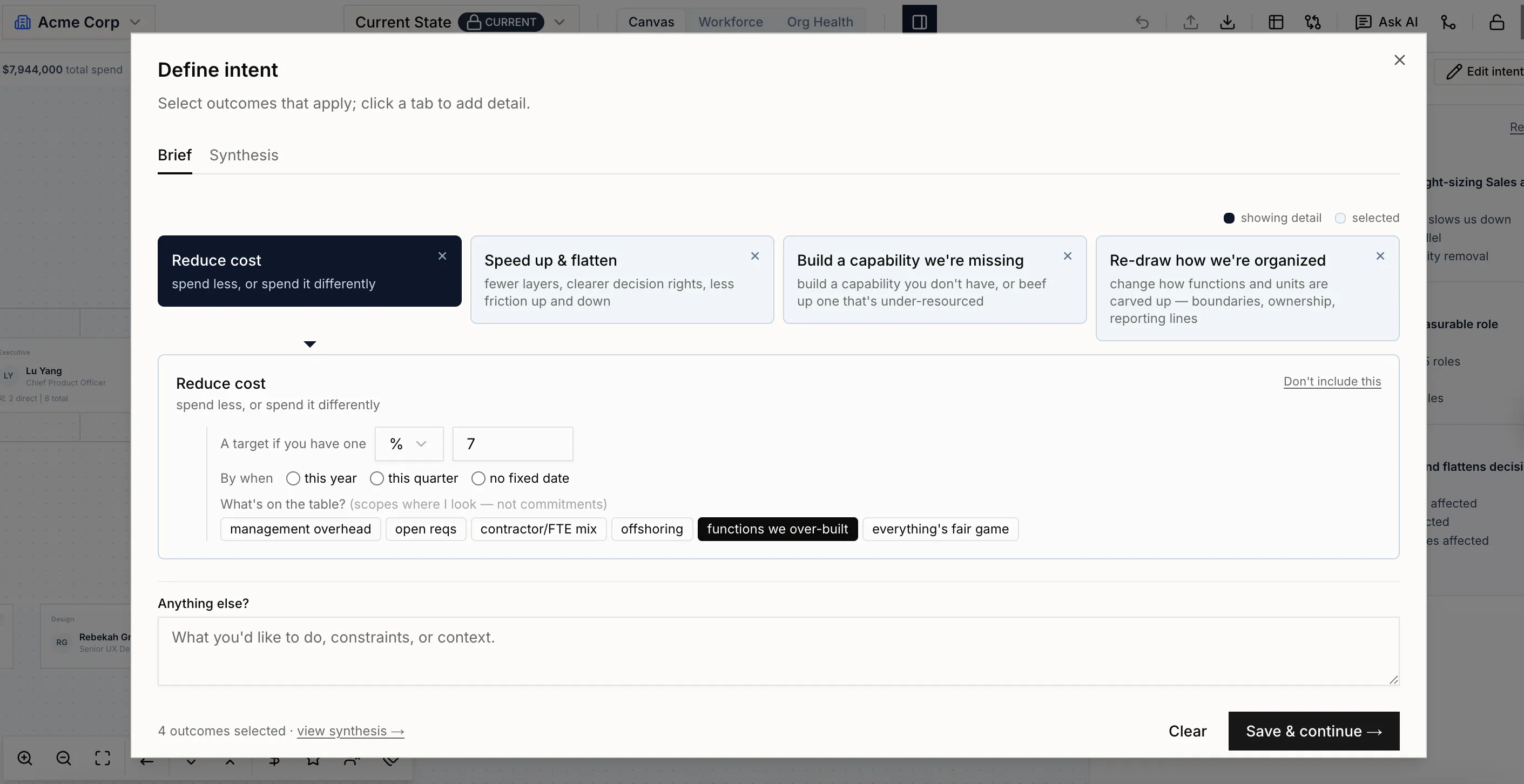
OrgDrafter is built for transaction-level speed. Import your data, and the interactive modeling canvas is ready immediately. No implementation engagement, no waiting on an admin queue.
Enterprise financial analytics, without the overhead.
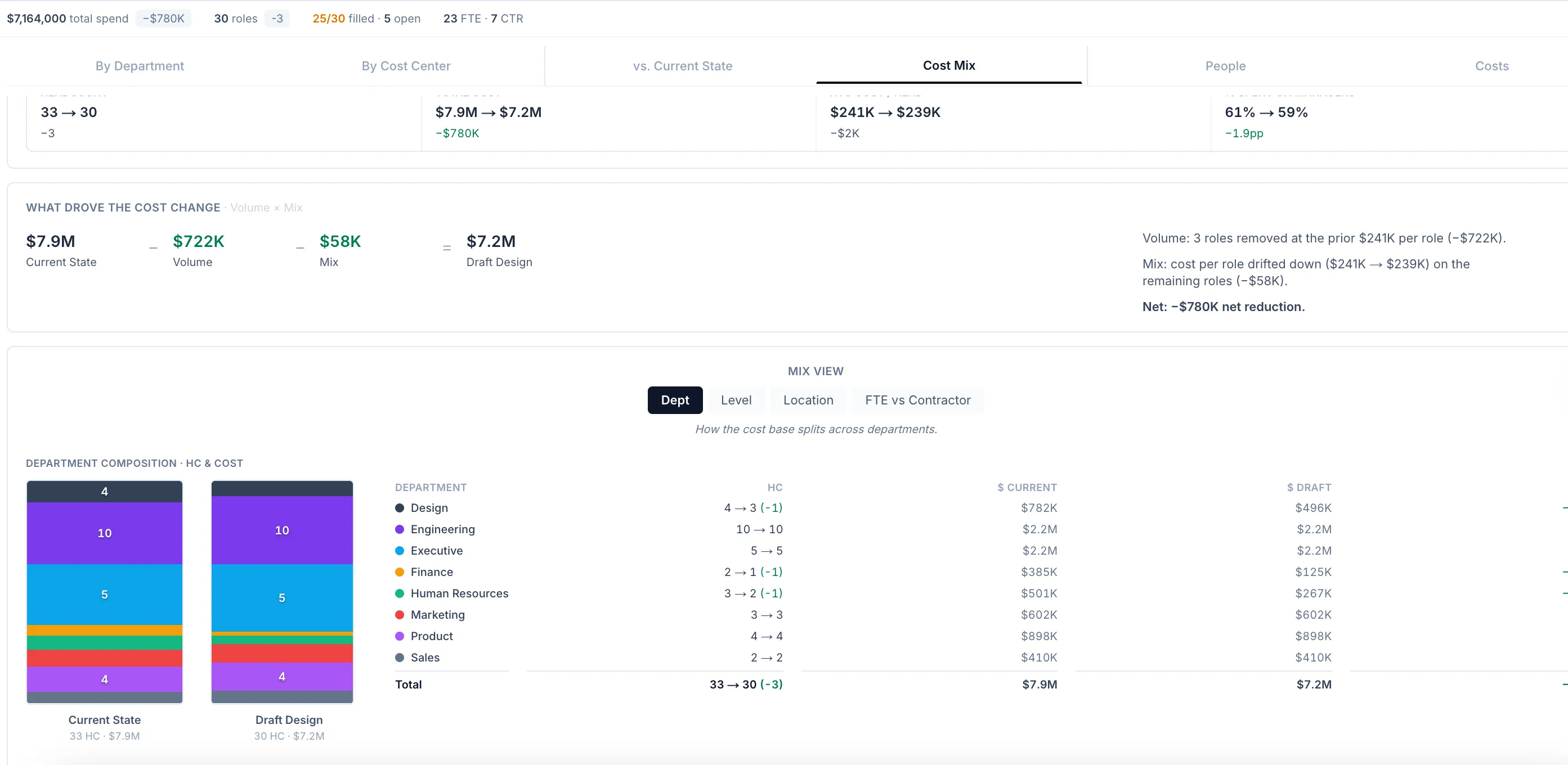
Orgvue's analytics are deep, but unlocking them often requires specialized modeling skills and ongoing administration to keep dashboards current.
Every position carries its fully-loaded cost, so run-rate and synergy math update the moment you move a role. Volume-vs-mix breakdowns are built in — no pivot tables, no analyst handoff.
Confidential modeling stays isolated.
Enterprise data isolation usually comes bundled with enterprise complexity and procurement timelines.
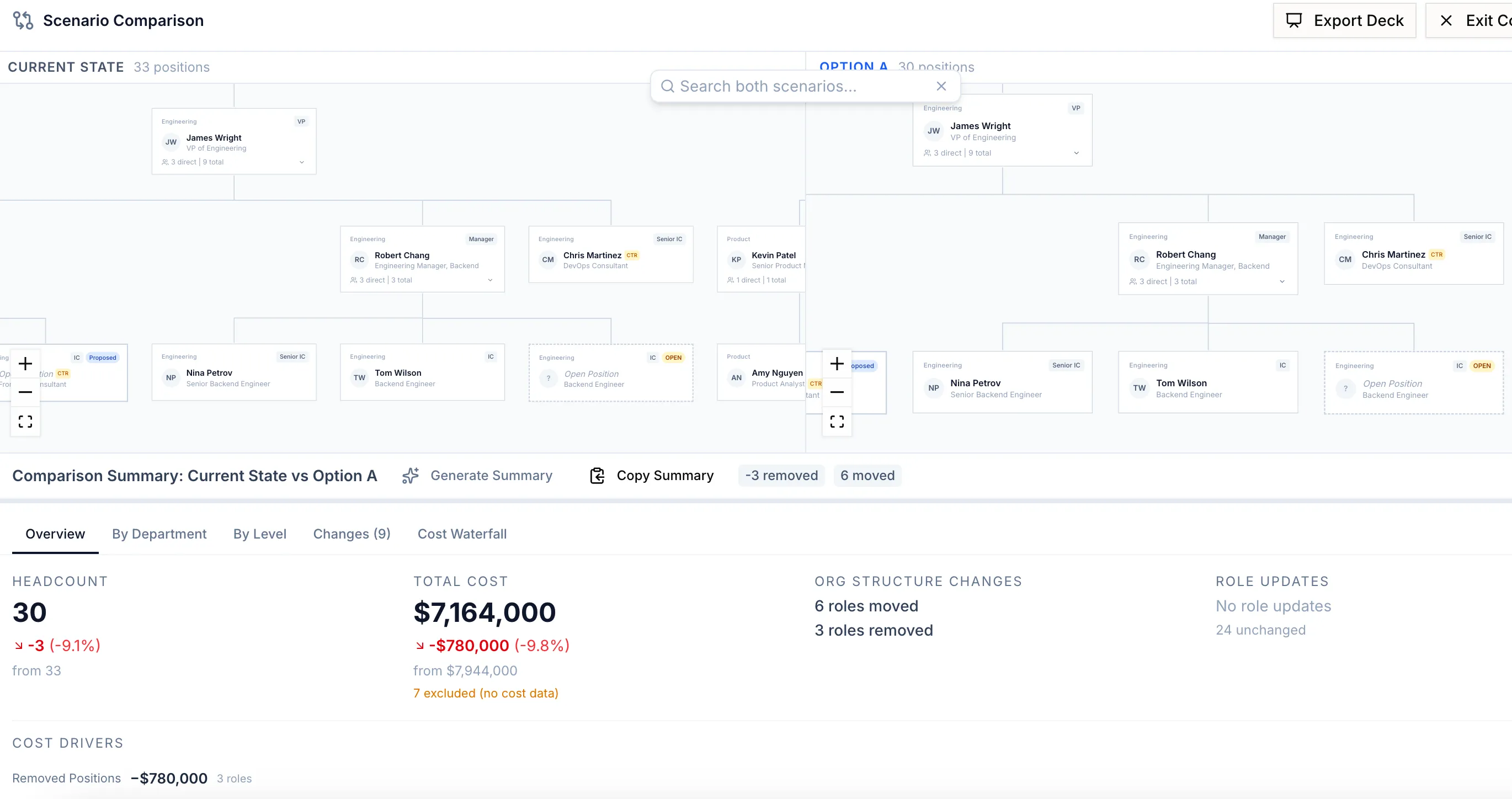
OrgDrafter keeps deals tenant-isolated while staying lightweight: each deal or scenario lives in its own workspace, designed to keep sensitive headcount modeling separate across engagements.
See how OrgDrafter stacks up.
A live, data-linked org model where moving a node updates payroll, run-rates, and spans — not a diagram you redraw by hand.
Explore vs. MiroTrade the infinite whiteboard of sticky-note boxes for a structured org model with cost, spans, and scenarios underneath.
Explore Replace ExcelTrade fragile spreadsheets and version-control chaos for one live workspace that models future-state scenarios without breaking the math.
ExploreGet the power without the project plan.
We'll model your organization live and show you what day-one velocity actually looks like.